Overheating, Overcooling, Overamplified: A Diagnostic Approach to Conservatory Glass
Photo: Davidmadelena, CC BY-SA 4.0, via Wikimedia Commons
A conservatory is expected to be a pleasant room for most of the year. In practice, many become unusable in July, expensive to heat in January and intolerably loud whenever a car passes. The instinct is to blame the glazing and to price a replacement. That instinct is sometimes right, but often it directs money at the wrong component.
A conservatory is a system: frame, glass, roof, seals, ventilation, shading and the door that separates it from the house. Glass is one part of that system, and its contribution varies enormously with orientation, roof construction and how the room is used. The sensible approach is diagnostic. Establish which symptom dominates, find its cause, and only then specify.
Symptom one: too hot in summer
The greenhouse effect is straightforward. Short-wave solar radiation passes through glass, is absorbed by floors and furniture, and is re-radiated as long-wave heat that the glass retains. A conservatory has a very high ratio of glazing to floor area, so the effect is pronounced. The roof is usually the dominant contributor: in a typical glass-roofed conservatory, the roof accounts for the majority of unwanted solar gain, not the vertical walls.
Useful checks: establish the orientation, since a south or west-facing roof will receive far more direct sun than a north-facing one. Record temperatures at mid-morning and mid-afternoon on a warm day, in the conservatory and outside, to establish the actual differential. Note whether the doors to the house are kept open, which allows heat to migrate into the dwelling. Finally, look at the blinds: internal blinds intercept radiation after it has already entered, so they reduce glare more than temperature.
Symptom two: too cold in winter
Single glazing has a thermal transmittance of roughly 5.6 to 5.8 W/m²K. A modern double-glazed unit achieves around 1.4, and a good triple unit around 0.8. Those figures matter, but the roof and the seals matter more in most conservatories. Multiwall polycarbonate, common on older roofs, deteriorates with UV exposure and loses performance; failed seals around roof panels admit cold air directly; and an unheated conservatory separated from the house by a poorly fitting door will always feel cold.
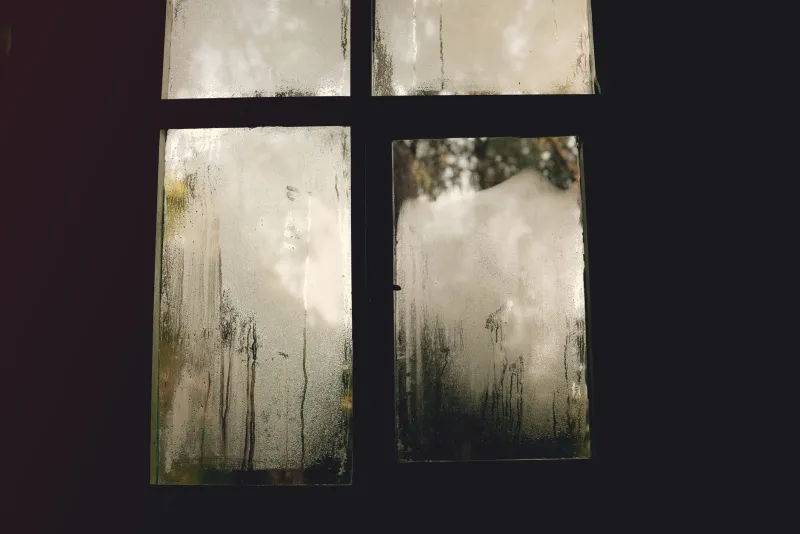
Useful checks: look for condensation forming on the inside of panes, which indicates a cold surface rather than a leak, and for misting between panes, which indicates a failed sealed unit. Run a hand around frames and roof junctions on a windy day. Confirm whether the room is actually heated, since a radiator sized for a garden room will not warm a single-glazed structure in February.
Symptom three: too noisy
Sound reduction depends principally on mass and on airtightness. Single glass is light, so it transmits airborne noise readily, particularly low-frequency traffic rumble. Laminated glass with an acoustic interlayer performs noticeably better than monolithic glass of the same thickness because the interlayer damps vibration. An asymmetric unit — two panes of different thicknesses — reduces coincidence resonance and improves performance further.
Useful checks: identify the character of the noise. Low-frequency road and rail noise behaves differently from higher-frequency aircraft or neighbourhood sound, and the specification should follow. Then check the seals. A perfectly specified acoustic unit set in a draughty frame will underperform a modest unit in a well-sealed one, because sound takes the path of least resistance through gaps and trickle vents.
What specifications can realistically deliver
Solar-control glass is available as body-tinted, reflective-coated or soft-coated product. The best of these can reduce total solar heat gain substantially, but always at some cost in daylight transmission, and colour rendering changes with the tint. For a west-facing roof, the improvement can be transformative; for a north-facing wall, it achieves very little.
Laminated glass is the pragmatic multi-purpose choice. It satisfies safety requirements, holds together if broken, improves acoustic performance and offers some resistance to penetration. Where a conservatory has low-level glazing or glass in doors, safety glass is a requirement rather than an option, and laminated gives more back for the money than toughened alone.
Applied solar film is the cheapest intervention, and it does work, but it carries risk. Film applied to sealed units increases the temperature of the outer pane and can induce thermal stress cracking, particularly on older or already-degraded units. It should never be applied without confirming that the unit is suitable.
Where upgrades commonly fail to deliver
Three mistakes recur. The first is replacing wall glazing when the roof is the source of the heat. The second is specifying high-performance glass while leaving failed seals and open vents unremedied, so the room remains cold and noisy. The third is treating ventilation as an afterthought: a conservatory with no opening vents, no roof windows and no fan will overheat on a still summer day whatever glass is installed.
Shading deserves equal weight. External shading — awnings, louvres or an external blind — intercepts sunlight before it becomes heat and is generally more effective than any internal blind. Where the budget is limited, external shading on the sun-facing elevation often outperforms a glazing upgrade.
Safety and compliance
Replacement glazing in critical locations — within roughly 800mm of the floor, in doors and adjacent to doors — must be of a safe type under the Building Regulations. Conservatories are exempt from certain thermal requirements where they are separated from the dwelling by external-quality doors and fall under the size threshold, but that exemption does not extend to glazing safety. Any replacement should be notified appropriately and installed by a competent installer.
A practical sequence
Measure the problem before measuring for glass. Log temperatures across a summer week and a winter week. Note orientation, roof material, age of units, presence of misting, and the condition of seals and vents. Identify whether the dominant complaint is heat, cold, noise or all three. Address seals, ventilation and shading first, since these are inexpensive and frequently decisive. Only then specify glazing, and specify it against the symptom you have actually identified.
A conservatory that is too hot, too cold and too noisy is rarely suffering from a single fault. It is usually suffering from several small ones, and the most expensive remedy is not automatically the most effective.