The Other Half of the Upgrade: Auditing Old Window Frames Before New Glass Goes In
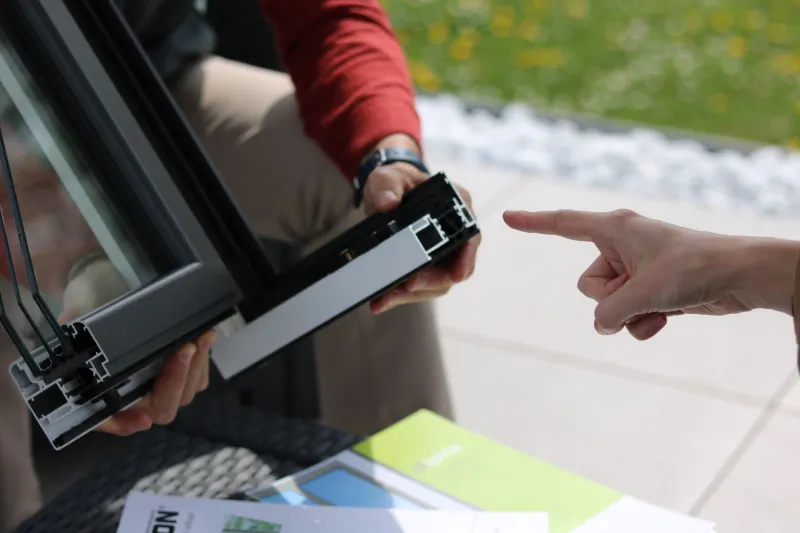
When a room feels colder than it should, or traffic noise still seeps in after a glazing upgrade, the glass tends to take the blame. It is the visible, marketed component — the part with the U-values, the coatings and the gas fill. The frame, meanwhile, is treated as scaffolding: a thing to hold the panes in place. This is a costly misunderstanding. A window is a system, and the frame governs how well that system performs.
Why the frame deserves equal scrutiny
The frame determines how heat escapes at the edges of the glass, how rainwater is collected and expelled, and how rigidly the sealed unit is held. If a frame is bowed, the unit is stressed and its perimeter seal can fail prematurely. If drainage channels are blocked, water sits against the glazing gasket and finds its way inward. In the UK climate, where wind-driven rain is routine, these are not theoretical concerns.
There is also a commercial point. When new glass goes into old frames, responsibility for performance is often split between two parties. The glazing warranty may cover the unit; the frame warranty may have expired years ago. Before spending money, it is worth establishing which half of the assembly is actually letting you down.
Check one: squareness and structural soundness
Open and close each opening sash through its full travel. A sash that catches, rubs or needs a firm push to lock may be telling you the frame has racked. Look closely at the mitred corners: gaps, hairline cracks in welded joints or lifting trim are all signs of movement.
Use a spirit level against the head and the sill. Then measure both diagonals of the opening with a tape measure. On a square frame the two measurements should be within a few millimetres of each other. A wider discrepancy indicates distortion, and glass should not be ordered until it is resolved.
On older uPVC, a bulging outer face can indicate failed reinforcement. On timber, probe the bottom corners and lower rails with a bradawl. Softness means rot, and rot rarely stops where you can see it.
Check two: where does water go when it lands?
Find the drainage slots on the outer face of the frame, usually beneath small clip-on caps. Clear them gently with a cocktail stick rather than a screwdriver. Look for staining beneath the slots, moss growth in the channel, or water marks on the internal reveal.
On a wet day, watch the sash. Water should collect in the frame channel and leave through the slots and sill, not track around the sash and drip inside. Blocked drainage is a common and often overlooked cause of misted sealed units, because standing water attacks the perimeter seal.
Check the sill too. A sill that slopes the wrong way, or has failed sealant along its junction with the frame, will push water into the wall rather than away from it.
Check three: the thermal bridge you can feel
On a cold morning, place the back of your hand against the internal face of the frame, then against the edge of the glass. A frame that feels markedly colder than the glass edge is likely conducting heat outward. This often happens through uninsulated steel or aluminium reinforcement, or through a profile without an effective thermal break.
Condensation forming on the frame rather than on the glass is another clue. So is a cold draught that persists when the window is closed and locked. In cavity walls, look at the reveal: a thermally efficient window set into an uninsulated reveal will still feel cold at the edges, because the cold bridge has simply moved into the wall.
Check four: seals, gaskets and moving parts
Rubber gaskets should be pliable, continuous and properly seated. Run a finger along the full perimeter. If the rubber crumbles, has flattened to a ribbon or is pulling away at the corners, it has reached the end of its useful life. Replacement is possible, but widespread deterioration usually points to a frame that is older than the glass you are about to buy.
Check hinges for play and handles for smooth locking. A stiff espagnolete mechanism can sometimes be adjusted. Persistent misalignment, however, tends to lead back to frame distortion rather than the hardware itself.
Check five: material-specific decline
Timber frames fail at the sill and lower rails first. Look for flaking paint, soft putty and dark staining. uPVC frames yellow with age, which is cosmetic, but cracks at welded corners, bulging faces or a chalky surface indicate UV degradation. Aluminium frames should be checked for thermal break integrity; if the internal face is cold and condensation forms on it, the break may be compromised. Composite frames can delaminate, particularly around fixings.
The decision framework
Reuse of existing frames is defensible only when all of the following hold:
- The frame is square, unbowed and free from cracks or rot.
- Drainage slots are clear, the sill is sound and there is no evidence of water behind the frame.
- The reveal is insulated and there is no obvious thermal bridge at the frame face.
- Gaskets and hardware can be renewed as part of the work.
- The profile has sufficient rebate depth to accept the thickness and weight of the proposed sealed unit.
- The warranty, in writing, covers the combined assembly of new glass and old frame.
Reuse should be refused when any of the following apply:
- Rot, soft timber or cracked welds are present.
- The frame is bowed or has failed drainage with signs of water ingress.
- Condensation forms persistently on the internal frame face.
- The proposed unit is deeper than the existing rebate allows.
- The original frame was designed for single glazing and has no drainage provision.
Questions for an installer proposing to reuse frames
A lower quote is not the same as a sound decision. Ask the following before authorising work:
- Will the new sealed units be covered by a warranty that expressly includes the existing frames, and can I have that in writing?
- What is the rebate depth, and can it accommodate the unit you are proposing?
- How will you confirm the frame is square before the glass is manufactured?
- What happens if rot or a failed drainage channel is discovered after the units have been made?
- Will gaskets, drainage caps and hardware be renewed, or reused?
- Can you show me the thermal break or reinforcement within my existing profile?
- Does the price include making good the reveals and the sill?
- Who accepts responsibility if the new unit fails during the guarantee period?
A concluding view
The savings from reusing frames can be genuine, but only where the frame is serviceable. The prudent sequence is inspection first, specification second, order third. An assessment carried out by someone with no financial interest in a full replacement is ideal; failing that, ask the installer to record their findings in writing. A window performs only as well as its weakest interface, and in most upgrades that interface is the frame.